
Scope
UI/UX
Prototyping
User Research
Type
Web Application
Team
7 Members
Work For
Konrad Group
Year
2026
Duration
4 Months
Role
UI/UX Designer
The Goal
A global auditing firm is in the process of modernizing their internal web application to adhere to UI/UX standards, streamline the auditing workflow, and to meet their strategic business objectives. The goal of this project is to integrate a robust task management system within the auditing platform to help teams track and plan their work.
Current Platform
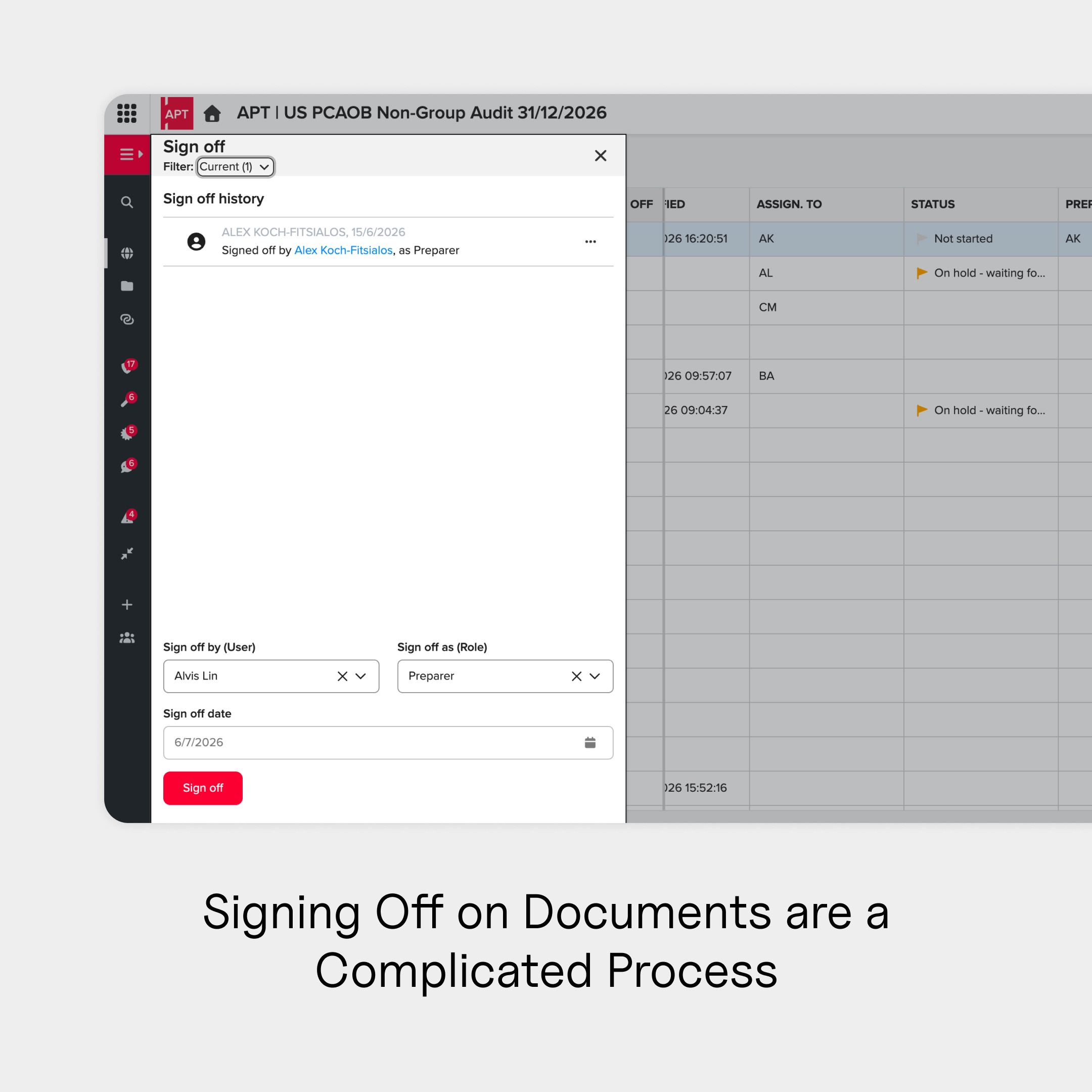
The current design of the platform had many critiques from stakeholders and auditors alike. Many audit processes felt overly complicated and contributed to user feeling as though the site itself slowed down their workflow. Additionally, there were many features that existed within the platform but was hard to find due to navigation and buttons being structured in a way that was not intuitive.
One of the main issues when developing the app was that many core audit features had to be “crammed” into a single screen or panel. This led to design decisions that were not thought out properly and resulted in extremely information dense systems.


Challenges
Being able to understand auditors needs to highly complex engagements required researching and talking with members from the client team. Having a fundamental understanding of auditing in general was required to be able to design useful features for the project management stream.
Vague requirements and expectations was another challenge within the scope of the project. Many features and variables were unknown and had to be discovered during the entirety of the engagement. This required the team to challenge and question decisions from stakeholders to better understand their core asks.

Understanding the Product
To understand how a task management system could be set up to better serve the needs of an audit, the team had to conduct a thorough analysis on how the overall audit workflow operates. White boarding sessions were held with stakeholders where the definition of tasks, completion requirements, and task assignment were understood.
From initial white boarding sessions, the design team generated journey flows of a task. This followed the entire lifecycle of a task from creation to completion and was validated by the stakeholder team.

Evolution of Screens Created
Design Process
The design process involved iterating on designs as requirements and stakeholder strategy evolved. Designs ranged from initial conceptual designs, to blue-sky explorations, and ended with screens that met the scope for an initial platform launch.
The project also had a design library stream where a robust component system was being designed and developed by the team. The screens on the Project Management stream had to adhere with this library and this required the team to collaborate cross-functionally with different pillars of the engagement.

Final Deliverables to Client
Results and Feedback
The final designs showcased a workflow that was highly customized to the auditing workflow and will standardize how audit are preformed across different engagement types. The designs were validated by stakeholders to have met auditing requirements and address user pain points. Stakeholders found that the UX was extremely helpful and fully encapsulated the entirety of an audit engagement.


